
Unsponsored Indecency
Who corporate sponsors cropped out of the image of queer Pride

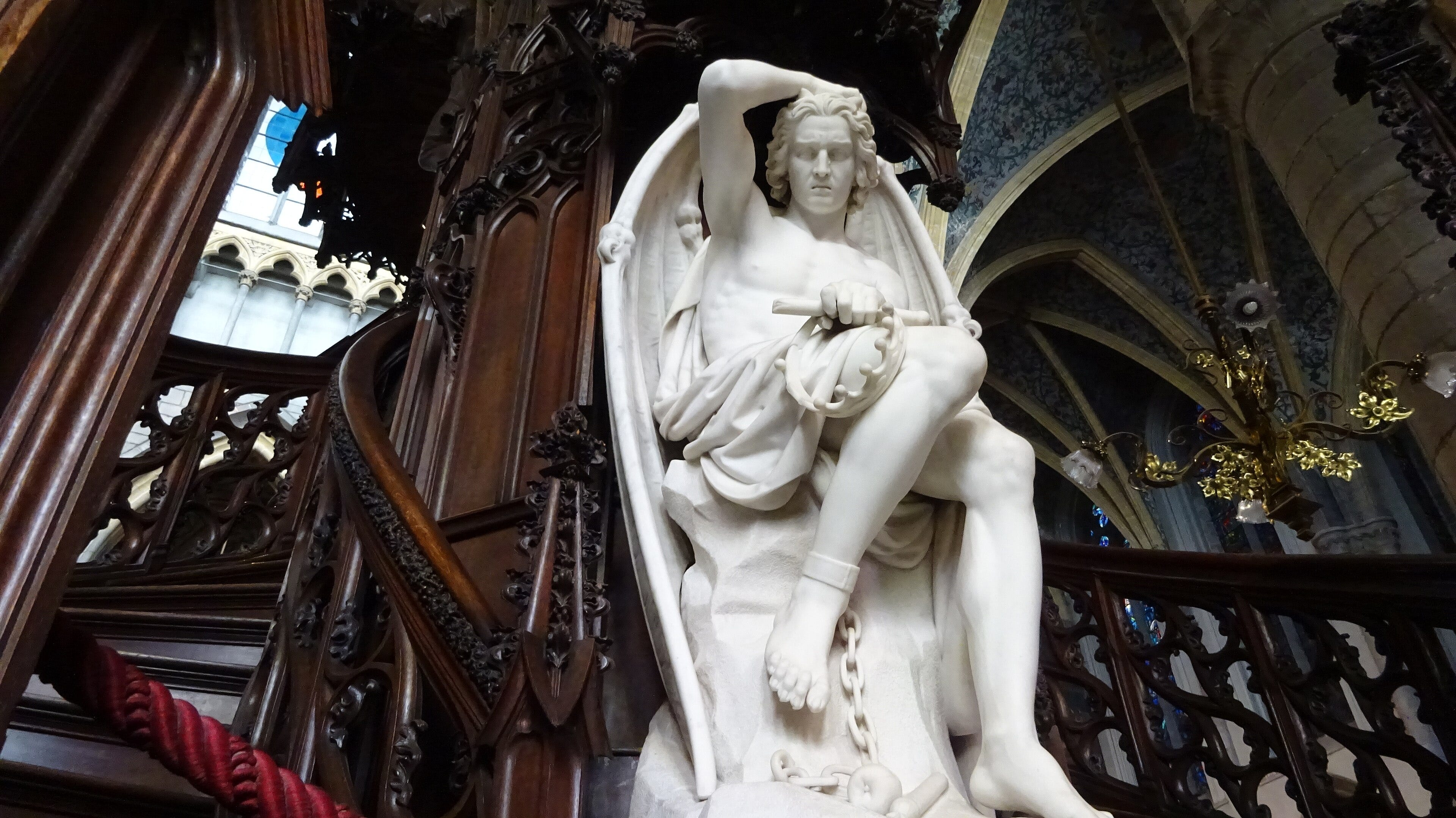
Philly was filled with color, from rainbows to gorgeous ethnic diversity, parading under the limestone colonnades of The Philadelphia Museum of Art for Pride 2026. 147,000 heads strong, Philly was in for a hell of a party. In years prior it was free to anyone that wanted to celebrate in the queer safe space. This was the first year since 2021 that came at a price: $10. Why are they switching up? It was itemized for anyone curious to know what their Hamilton was going toward.1,2
Infrastructure. Safety. Accessibility. Staffing. Insurance. Coordination with the City of Philadelphia.
Many of those at Pride had been joining the party year after year, but the costs listed under their admission were unfamiliar. Though it was familiar to the disproportionately queer working-class that made the festival possible year after year. Massive events don’t organize themselves. LGBT service-workers, vendors, security, chauffeurs, and gig-workers knew the prolific effort from many hands that went into building the cultural celebration. Each of those hands extended a bill that needed to be paid. Hands that were previously invisible to patrons. But the cost was nothing new to the organizers of Pride 365; it was just new to the consumer at the gate.
Sponsorships were melting away under the fever of rising costs, and political tensions due to DEI policy. Meanwhile the disproportionately queer workers that kept Pride running didn’t go anywhere. They were still running the show. Except now the cost of their work was being more shouldered by their queer peers. A specific contingent of the workforce, 44% of whom can’t cover a $400 emergency without borrowing money from somewhere according to the Center for Economic Policy Research (CEPR).3 Only in the vacuum left by absent corporate sponsors are the needs of queer workers making it into a bill the consumer can read. Rainbow-wielding sponsors that were all too comfortable taking credit for making Pride happen in years prior. What did those corporations really benefit from by erasing the material needs of queer workers from the public eye? And how did this clock to the queer eye?
I. The Bill Comes Due
In 2023, Pittsburgh Pride Revolution organizers clarified security costs went from consuming 5% of the festival budget to one-third.4 Largely due to well-documented increases in bomb threats, shootings, harassment, and vandalization due to increasingly homophobic sentiments spiking worldwide as politics continued to polarize. Queer fits weren’t the only things bringing the heat to the gay community. That year anti-LGBT incidents tripled to 145 from 48: 102 incidents of harassment, 37 of vandalism, and 6 assaults according to a joint report by the Anti-Defamation League (ADL) and the Gay & Lesbian Alliance Against Defamation (GLAAD).5
By 2025 we’re up 400% of incidents since 2022.6 Somehow this isn’t just limited to domestic hate crimes. In 2024, the FBI and DHS even issued public warnings about foreign terrorist organizations targeting Pride events–without neglecting to mention ISIS operatives attempted an attack on Vienna Pride in 2023.7 Under PR pressure, corporate sponsors saw their investment in Pride running into a wall of violence that didn’t mix with their family-friendly image, so they started pulling out of festivals around 2025 and 2026 due to both the growing threat environment and increased costs. A movement characterized by increases in hate crimes was harder to sell to shareholders, and didn’t mix with the growing DEI policies delivered by the White House. Toronto’s police costs tripled from 2022 to 2023.8Ironically, sponsors are pulling out as security costs are spiking due to the same political heat that brought the hate crimes. They were willing to pay the cost for rainbow merch and PR brownie points, but not the cost to their reputations under the microscope of the status quo.
“There has been an increase of attacks and just hateful bigotry … that pertains to the queer community as a whole. We just want to make sure that it’s a safe, fun and free event for everybody.” — Dena Stanley, co-founder, Pittsburgh Pride Revolution4

In 2025, Comcast, Anheuser-Busch, Diageo, Benefit Cosmetics, and La Crema pulled out of San Francisco Pride, a group worth $1.3 million to the festival.11 Following some negotiations to get some of those sponsors back, and finding additional funding sources, the festival was still short $300,000.9,10 Well executive director Suzanne Ford called it negotiations, but the style could be aptly described as name-and-shame public peer pressure tactics.
“The world’s changed politically, and the environment for sponsorship has changed dramatically. And I think these companies have determined that it’s not a good investment in Pride this year.” — Suzanne Ford, executive director, San Francisco Pride9
Pittsburgh Pride organizers only expected to raise 30% to 40% of the corporate sponsorship dollars they were able to raise in years prior.12 In 2026 they only managed to put together $33,000 for their corporate so-called allies against the budget goal of $500,000.12 After budget cuts, and sourcing other funds they still had to pull a $75,000 grant from the Pennsylvania Department of Community and Economic Development.13 But not before publicly threatening to cut the children’s stage if they couldn’t raise enough capital for the festival. Which they ended up downsizing to a designated children’s play area with a face-painting booth.13
New York City Pride had to pull $100,000 from peer-to-peer funding to close the gap on opening the gates.14 A gap left by corporate sponsors who used to be called allies, and was filled by small local queer-owned businesses like BlissBomb Baked Donuts and Gilded Age Jewelry certified by the National Gay and Lesbian Chamber of Commerce.14 The fiscal burden for supporting Pride rolled downhill. The same corporate sponsors that benefitted from PR virtue-signaling exposed smaller queer-owned businesses to greater financial burden. Companies they should’ve been protecting if they were authentic allies rather than philanthropic performers. Understanding why the rainbow movement struggles with support requires looking at the riot the parade was born from: Stonewall.
II. Anatomy of Pride
Sylvia Rivera helped build the foundation for Pride brick by brick at Stonewall. Her Puerto Rican father walked out shortly after her birth. Her Venezuelan mother ended her own life due to the pressures of domestic violence with a boyfriend when Sylvia was only three.15,16 Rivera was never destined for an easy life. Her effeminate gender expression brought violent attention from her grandmother who didn’t approve. Later Rivera’s grandmother revealed that her own mother tried to kill her too out of fear that she’d have a hard life.15 At 11 years old, she ran away from the last family she had left, and hustled sex work on 42nd Street to scrape money for food and shelter.15,16 She and her boyfriend Gary held on to each other through survival sex trade around the Times Square area out of necessity.17 An environment that was largely organized by the Mafia.20,21 Around the time they broke up Rivera was 17 years old when she reportedly helped brick-throwing trans women oppose the police with force at the Stonewall riots.15,16
At 19, she co-founded Street Transvestite Action Revolutionaries (STAR) with Marsha P. Johnson, a shelter in the back of an abandoned truck in Greenwich Village.16,40 Johnson dropped in New York City with $15 to her name, and a bag of clothes.18,19 Homeless, she depended on sex work on Christopher Street to make ends meet where she found her community, and became friends with Sylvia Rivera.18,19 She was only 23 at Stonewall.18
In 1969 homosexual activity was illegal in every state except Illinois, leading to legal discrimination.23Police used force behind “masquerade” laws requiring at least three articles of clothing be worn matching sex assigned at birth–going as far as dragging people into bathrooms to verify biological sex.22 The cops weren’t discreet about it either. Business owners couldn’t legally obtain liquor licenses for gay bars forcing them to operate on the fringe of society mostly controlled by the Genovese crime family mafia.20,21 Police were bribed around $1,200 per month to turn a blind eye.20,22 Show raids gave the performative impression cops were still doing their job while bribes weighed in their pockets–while business owners were tipped ahead of time to conceal liquor and cash.21,22 The gayest raids of all time. But at 1:20 a.m. on June 28th, 1969 a real raid happened possibly because the bar stopped paying bribes, or maybe because there was a change in police captain.22 A lesbian often identified as Stormé DeLarverie became the spark that lit the riot.23,24 She was roughed up by police, complained her cuffs were too tight, and when she was forced into a police vehicle she cried out:23,24
“Why don’t you guys do something?!”
For 6 days drag queens, trans women of color, homeless youth, and gay men wielding bricks transformed a reaction to a single raid into a sustained riot against the broader system of oppression.23,24 The cops thought they could get away with excessive force on the queer community. That assumption bought them 6 days of bricks.
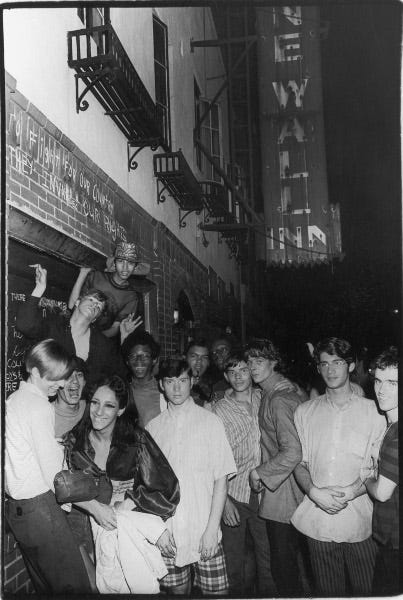
But the years following Stonewall weren’t victorious for the authors of Stonewall’s legacy. Johnson would live to see the movement she helped begin become selectively inclusive of trans people that could “pass” under heteronormative standards.18 She watched the exclusion of members of her community labeled indecent fall under the lines of “respectable image” compatible with the movement in real time. Her body was found at the bottom of the Hudson River in 1992–a death that remains an open homicide investigation to this day.18,19
Rivera took a stand against the feminist gentrification of her movement in 1973 at Christopher Street Liberation Day Rally.25 A feminist activist loudly took the stage to argue that drag queens and trans women ought to be excluded from the gay liberation movement. She was the proto-TERF (Trans-Exclusionary Radical Feminist), before the language for it existed. Selective priority of certain marginalized people over others based on the principles of respectability and indecency. There was something too indecent about the physical presence of trans women for the feminist to want to include them in her mission of liberation. Rivera wasn’t having it. She fought her way to the microphone to inject her own truth that would get her booed off stage:25
“You go to bars because of what drag queens did for you, and these bitches tell us to quit being ourselves?”
But the material precarity suffered by Johnson and Rivera was institutionalized before they were born. The legal action taken to economically exclude queer people from the workforce has a name and a date: The Lavender Scare of the 50s.
Under the guise of national security, lesbian and gay workers were systematically purged from federal employment in the late 1940s.26,28,29 By 1953, Eisenhower signed Executive Order 10450 legally mandating the purge leading to the dismissal of 5,000 to 10,000 workers solely based on their sexual orientation.27 The White House argued that queer workers were more likely to break under foreign pressure of blackmail, but not a single case of this was ever found.28 Evidence wasn’t even a requisite for termination, as dismissal was served over hearsay or even “guilt by association.”26,28 And if you’ve seen how modern private companies like Facebook flip-flopped over trans-inclusive terms of service depending on whether Biden or Trump sat in the Oval Office, you can understand how The Lavender Scare wasn’t limited to affecting federal employees. Private employers were also legally refusing to hire workers suspected of being gay.29,30 Entire career paths were closed to the queer community. The thin margins where queer people might be able to seek employment remained in bars, cafes, restaurants, and service work.30 Places that operated with less surveillance, and came with precarious informal employment as a default. The consequences of 1950s policy would terraform the labor market for decades keeping the queer working-class broke, and more desperate for work. It’s no coincidence that the heteronormative labor market of the 1950s Lavender Scare pushed the queer demographic into the service industry and sex work.29,30 Even when the laws changed, the disproportionate labor market it created didn’t. Eisenhower’s purge became Pride’s infrastructure.
Fast forward to 2015. Gay marriage was finally legal. Trans women were virtually forsaken by the LGBT movement. By then gender identity protections were stripped from the language of the Employment Non-Discrimination Act (ENDA) that protected other queers which the movement failed to get passed in Congress (but the signal was sent to trans people),41 and the New York Sexual Orientation Non-Discrimination Act passed without covering trans women either.42 Their radical physical presence was also excluded from Pride visibility as the movement sought to sanitize an HR-friendly image that corporations were finally willing to co-sign. Indecent bodies had been removed from the frame, and corps were eager to invest in philanthropy to improve their own PR by virtue-signaling their support. They provided parade floats, funded operations, and slapped a rainbow on every piece of merch they could sell. The material labor that went into actually making the parade happen was disproportionately queer workers who never made it into the limelight. Security, chauffeurs, vendors, and service workers made Pride possible, but took no benefit from the cameras who made rainbow corporate endorsements the hero of Pride.
The queer community largely recognized the conflict of interest by 2019 before Pride organizers did.31The floats vanished from The Queer Liberation March, signaling that the LGBT community recognized corporations were less allies than self-interested investors–years before corporations began making their mass exodus from the movement, and a parallel to the same type of bastardization referenced by Rivera at the Christopher Street Liberation Day Rally in 1973 where she was booed off stage.25,32

“SF Pride should be asking itself, what is its purpose? Is it to provide corporations with an outlet to showcase their rainbow branding, or is it to provide LGBTQ+ people from all over the world with an opportunity to feel safe and seen?” — Melissa Hernandez, co-president, Harvey Milk LGBTQ Democratic Club9
Which isn’t to say that there’s no value in visibility: there is. But only when it’s a supplement to real structural change to the system that keeps queer workers down. Visibility is a futile replacement for material change. Without directly improving the space that society and the economy hold for queer people, visibility is a consolation prize with no liberatory value. A movement can’t liberate its people with a rainbow logo.
But if the corporate branded image of Pride was a facade built on the backs of the sexually transgressive edited out of the frame, then what was the image for? Who did it benefit, and why did it need to omit the people it claimed to help? A theologian from Buenos Aires wrote on the mechanisms that build paradigms like this.
III. The Politics of Indecency
Let’s talk about the first woman to ever serve as professor of theology at New College in its 160-year history: Marcella Althaus-Reid.34 She was a bad bitch. Growing up in the Argentinian dictatorship, she saw firsthand how liberation theology intersected with the disenfranchised.34 Particularly, how the ministry of her own church defined the poor, and who that definition excluded.
After earning her BA in theology from the Instituto Superior Evangelico de Estudios Teologicos (ISEDET), she became a community organizer under an Argentinian dictatorship.34 The type that puts dic back in dictator. Working with the Evangelical Methodist Church of Argentina, she saw firsthand how “the poor” are framed when the church decides who to serve.34 More specifically, who “the poor” is not and who they won’t serve.
It’s definitely not the lemon vendors who were women that didn’t wear underwear. Enduring brutal heat in Latin America, and poverty that prevented them from owning more clothing, they smelled of indecent body odor which consumers associated with the lemon basket. They didn’t fit the respectable poor that the Methodist Church labeled deserving of protection, so they were excluded. Not because of any direct sexual transgression, but merely because of the manner of their physical presence as women enduring brutal poverty in the heat.33,35 The church chose not to serve them–something that would stay with Althaus-Reid for over a decade after she moved to Scotland to serve as a professor of theology and published Indecent Theology detailing her observations.34 In those pages she described how only the respectable poor were found deserving of the church’s help. But that respectable image of the poor was formed because the so-called charitable institution defined it without those they labeled indecent.33Sweaty, smelly, and unconfined by the expectations of modest femininity, the lemon vendors were left out of Christian charity by design under the definition of the respectable poor worth helping.33,35 It just wasn’t a good look for the church.

She witnessed what she called “preferential option for the deserving and asexual poor.”33 Not using the word asexual in reference to any particular sexual transgression, but rather the sexual presence of their bodies. The smells, the sights, and the sounds of a natural body in motion exposed to the elements with marginal clothing was deemed something that the Christian institution was unwilling to feed, clothe, and shelter. The sheer indecency of their raw humanity repelled selectively helping hands.33,35
Isn’t that what Rivera had to put up with at Christopher Street Liberation Day when a feminist argued against the inclusion of trans people in the movement to liberate queer people?25 There would have been no Pride without the trans women that rioted at Stonewall, yet they were cropped out of the photo of justice as soon as the movement began to find its sanitized image palatable to the heteronormative hegemony. Feminists wanted to erase trans women because of their indecent bodies that didn’t fit the respectability politics they were aiming for. They wanted the approval of the straight men that were oppressing them while trans women were fighting for a place at the table of society without approval at all. And that’s just the cultural analysis. From the material analysis we can see how Pride corporate sponsors amputated the queer working-class from the spotlight on what made the festivals possible year after year. The sweaty and underpaid queer workers holding Pride in place went unnoticed until a $10 ticket itemized their labor for patrons at the gate.1,2 Until then it was all thanks to rainbow Bud Light.
Liberation theologian Althaus-Reid named the inglorious economic system platforming the selective mechanism at the end of her book Indecent Theology: Savage Capitalism.35 A system that upholds the politics of indecency that decides which bodies are too indecent to be a part of the respectable image of charity.33,35 The LGBT community has a name for a similar mechanism called Rainbow Capitalism.36 The package being sold by corporate sponsors was never structural change to liberate queer workers. It was a rainbow-colored bowtie on a package forwarded to their shareholders signaling their PR narrative. The sweaty hard-working queer community that actually got their hands dirty running the show didn’t paint that picture and were erased by the power of corporate capital. A picture that was decent and respectable to investors who weren’t a part of the LGBT community, but wanted some peace of mind that they were investing in real people. Ultimately, charity was a PR tactic to fatten the bottom lines of shareholders.
For the sake of clarity, it’s worth noting that Althaus-Reid was writing about the plight of Buenos Aires, not Bud Light’s economic involvement with Pride fest in 2026. The stakes are different, the countries are different, and the problems being discussed are altogether separate. The parallel being drawn is about the similarities in abstract structure drawing on the language Althaus-Reid used to articulate the selective support extended by institutional charity, and the consequences that come with it.
IV. Without Permission
Queer workers are still enduring Lavender Scare logic to this day. Kash Patel terminated long-time employee David Maltinsky for posting a rainbow flag on his desk in October of 2025.37 Flagging it as “inappropriate display of political signage,” a man in power politicized gay identity to the detriment of a man’s livelihood. By April 2026, we’re seeing the Department of Defense begin actively terminating transgender service members from the military, people who’ve fought for our freedom, in cooperation with a presidential executive order that easily parallels Eisenhower’s Lavender Scare-era executive order.38 President Donald Trump renamed the Department of Defense to the Department of War, but for all intents and purposes I find it more appropriate to deadname the DoD.39 But the queer community is no stranger to moving without permission from the state or the corporation. Someone still had to run the show.

The donut shop and jewelry store filling the gaps left by absent benefactors in NYC weren’t just any investors–they were the very people Pride was supposed to be representing in the first place.14
Without the support of the state or corporate benefactors, Pride is going back to its roots. Did Marsha P. Johnson or Sylvia Rivera ask Tommy Hilfiger for a cheque when they started a shelter out of the back of an abandoned truck in Greenwich Village?18,40 The gay donut shop didn’t wait for a Fortune 500’s permission to make it rain on Pride’s financial needs.14 After the floats and the donations are gone, the queer community still has what it started with. The same nature of authentic community support and mutual aid that STAR House represented in the back of an abandoned truck.16,18,40
“My greatest hope would be that we take the time to just ban the noise and ban the chatter and let pride be what pride is. A moment for us to gather, be together to recognize one another. To take to the streets, to laugh, to dance, to sing, to celebrate, to recognize who and what we are, and all that God intends for us to be and to become.” — Bruce Kraus, Pittsburgh City Council4
Bibliography
Philly Pride 365 — 2026 Festival Ticket Page https://www.phillypride365.org/events-3/2026-philly-pride-festival-tickets
CBS Philadelphia — “Philly Pride 2026: March and festival information, road closures and more”https://www.cbsnews.com/philadelphia/news/philly-pride-march-festival-2026/
CEPR — “Economic Precarity Among LGBT Workers” (December 2024) https://cepr.net/economic-precarity-among-lgbt-workers
WESA/NPR Pittsburgh — “As threats increase nationwide, Pittsburgh’s Pride organizers spend more on security” (May 31, 2023) https://www.wesa.fm/identity-community/2023-05-31/pittsburgh-pride-safety-measures
ADL/GLAAD — “Anti-LGBTQ Incidents More Than Tripled During Pride 2023”https://www.glaad.org/blog/glaad-and-adl-report-anti-lgbtq-incidents-more-than-tripled-during-pride-2023
GLAAD — “GLAAD ALERT Desk Documents More Than 1,000 Anti-LGBTQ Incidents Nationwide in 2025” (January 27, 2026) https://glaad.org/releases/glaad-alert-desk-documents-more-than-1000-anti-lgbtq-incidents-nationwide-in-2025/
ABC News — “Foreign terrorist organizations could target Pride month events: FBI, DHS” (May 2024) https://abcnews.go.com/Politics/foreign-terrorist-organizations-target-pride-month-events-fbi/story?id=110178875
CBC News — “Pride organizers appeal for more funding as rising security costs could dampen festivities” (May 29, 2023) https://www.cbc.ca/news/canada/canada-pride-parades-security-1.6856128
KQED — “San Francisco Pride Struggles to Secure Sponsorships Ahead of 2025 Parade” (April 4, 2025) https://www.kqed.org/news/12031588/san-francisco-pride-struggles-secure-sponsorships-ahead-2025-parade
NPR — “San Francisco Pride Parade loses several corporate sponsors, organizers say” (March 24, 2025) https://www.npr.org/2025/03/24/nx-s1-5334685/san-francisco-pride-parade-loses-several-corporate-sponsors-organizers-say
KRON4 — “Major sponsors pull out of SF Pride, creating $1.3 million funding shortfall” (2025)https://www.yahoo.com/news/major-sponsors-pull-sf-pride-222757166.html
NextPittsburgh — “Pittsburgh Pride 2026 lags in funding as corporate sponsors pull back” (April 9, 2026) https://nextpittsburgh.com/latest-news/pittsburgh-pride-2026-lags-in-funding-as-corporate-sponsors-pull-back/
Axios Pittsburgh — “Pittsburgh Pride 2026: How organizers are closing the gap” (June 3, 2026)https://www.axios.com/local/pittsburgh/2026/06/03/pittsburgh-pride-2026-funding
Campaign US — “Pride 2026: How brands are navigating political backlash and DEI rollbacks” (June 2026) https://www.campaignlive.com/article/pride-2026-brands-navigating-political-backlash-dei-rollbacks/1960661
National Women’s History Museum — “Sylvia Rivera” https://www.womenshistory.org/education-resources/biographies/sylvia-rivera
Biography.com — “Sylvia Rivera” https://www.biography.com/activists/sylvia-rivera
Everyday Feminism — “5 Reasons Sylvia Rivera Is One of the Most Badass Radical Trans Heroes to Ever Live” (2015) https://everydayfeminism.com/2015/10/sylvias-legacy-trans-history/
National Women’s History Museum — “Marsha P. Johnson”https://www.womenshistory.org/education-resources/biographies/marsha-p-johnson
BlackPast.org — “Marsha P. Johnson (1945–1992)” https://blackpast.org/african-american-history/marsha-p-johnson-1945-1992/
PBS American Experience — “Why Did the Mafia Own the Bar?” (Stonewall)https://www.pbs.org/wgbh/americanexperience/features/stonewall-why-did-mafia-own-bar
Global Anticorruption Blog — “Corruption’s Queer History: Stonewall’s Seedy Underside” (June 2022) https://globalanticorruptionblog.com/2022/06/06/corruptions-queer-history-stonewalls-seedy-underside/
East Shore Unitarian Church — “The Stonewall Riots of 1969” https://esuc.org/the-stonewall-riots-of-1969/
Newsweek — “What Were the Stonewall Riots?” (June 2022)https://www.newsweek.com/stonewall-riots-lgbtq-movement-gay-pride-1710871
Refinery29 — “The Queer Black History of Rioting” (June 2020) https://www.refinery29.com/en-us/2020/06/9861317/first-pride-riots-history-black-lgbtq-blm
Gay & Lesbian Review — “Y’all Better Quiet Down” (August 2023) https://glreview.org/yall-better-quiet-down/
National Archives Foundation — “The Lavender Scare” (August 2023)https://archivesfoundation.org/newsletter/the-lavender-scare/
Biden White House — “A Proclamation on the 70th Anniversary of the Lavender Scare” (April 26, 2023) https://bidenwhitehouse.archives.gov/briefing-room/presidential-actions/2023/04/26/a-proclamation-on-the-70th-anniversary-of-the-lavender-scare/
History.com — “How LGBT Civil Servants Were Targeted in the 1950s” (updated May 2025)https://www.history.com/articles/state-department-gay-employees-outed-fired-lavender-scare
Time — “The Lavender Scare and the History of LGBTQ Exclusion” (June 2025)https://time.com/7295426/the-lavender-scare-history/
Gender Policy Report — “Queer Labor: LGBTQ Organizing in the Service Sector” (March 2025)https://genderpolicyreport.umn.edu/queer-labor-lgbtq-organizing-in-the-service-sector/
Wikipedia — Queer Liberation March https://en.wikipedia.org/wiki/Queer_Liberation_March
Gothamist — “Your guide to New York City Pride 2026” https://gothamist.com/arts-entertainment/your-guide-to-new-york-city-pride-2026
Alvizo, Xochitl — “A Little Indecency with Marcella Althaus-Reid,” Feminism and Religion (May 2015) https://feminismandreligion.com/2015/02/21/a-little-indecency-with-marcella-althaus-reid-by-xochitl-alvizo/
qspirit.net — “Marcella Althaus-Reid: Queer theology pioneer” https://qspirit.net/marcella-althaus-reid-queer-theology/
Dalton, Wesley — Review of Indecent Theology, BU Center for Practical Theologyhttps://www.bu.edu/cpt/files/2011/02/WDalton-Indecent-Theology.pdf
Inequality.org — “Combating Corporate ‘Pinkwashing’ During Pride Month” (December 2024)https://inequality.org/article/corporate-pride-pinkwashing/
CNN — “Veteran FBI employee sues bureau after being fired over displaying a pride flag” (November 19, 2025) https://www.cnn.com/2025/11/19/politics/veteran-fbi-employee-sues-fired-pride-flag
The Advocate — “Pete Hegseth’s Pentagon has started kicking trans troops out of the military, DOJ says” (April 16, 2026) https://www.advocate.com/politics/national/pentagon-begins-terminating-transgender-troops
NPR — “President Trump signs order to rename the Defense Department as the Department of War” (September 6, 2025) https://www.npr.org/2025/09/04/nx-s1-5529420/trump-department-of-war-department-of-defense
Biography.com — “Inside Marsha P. Johnson and Sylvia Rivera’s Friendship”https://www.biography.com/activists/marsha-p-johnson-sylvia-rivera-friendship
Washington Blade — “10 years later, firestorm over gay-only ENDA vote still informs movement” (November 6, 2017) https://www.washingtonblade.com/2017/11/06/10-years-later-firestorm-over-gay-only-enda-vote-still-remembered/
NYCLU — “Legislative Memo: Gender Expression Non-Discrimination Act (2019)”https://www.nyclu.org/resources/policy/legislations/legislative-memo-gender-expression-non-discrimination-act-2019